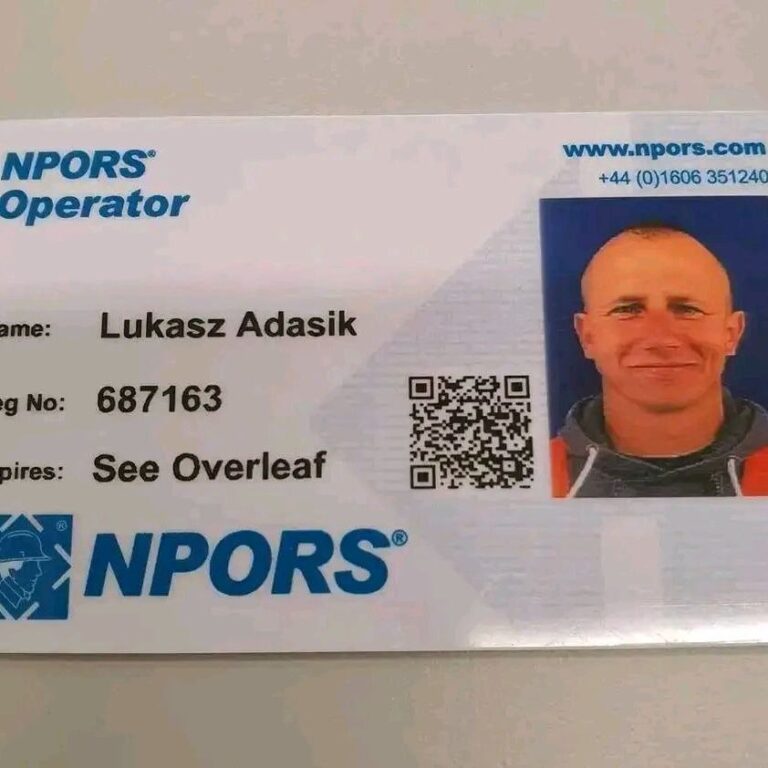
NPORS card requirements for plant operators are designed to ensure that individuals working with construction machinery meet strict standards of safety, competence, and professionalism. The certification is issued by NPORS and is widely recognised across the UK construction and civil engineering industries.
To qualify for an NPORS Operator Card, candidates must first complete relevant training with an accredited NPORS provider. This training is essential and forms the foundation of the certification process. It includes both theoretical instruction and practical, hands-on experience with the specific type of plant machinery the operator intends to use.
The theoretical component focuses on key areas such as health and safety regulations, hazard identification, site rules, machine controls, and safe working practices. Understanding these principles is essential to ensuring safe operations in demanding construction environments.
The practical training element allows candidates to operate machinery under supervision, developing real-world skills in handling equipment such as excavators, dumpers, forklifts, telehandlers, and rollers. This ensures that operators are not only knowledgeable but also confident and competent in using the machinery safely.
After completing the training, candidates must pass both theory and practical assessments. These assessments are designed to evaluate their ability to operate machinery safely, follow procedures, and respond appropriately to site conditions and risks.
Additional requirements may include age restrictions, appropriate identification, and in some cases, medical fitness depending on the type of machinery being operated.
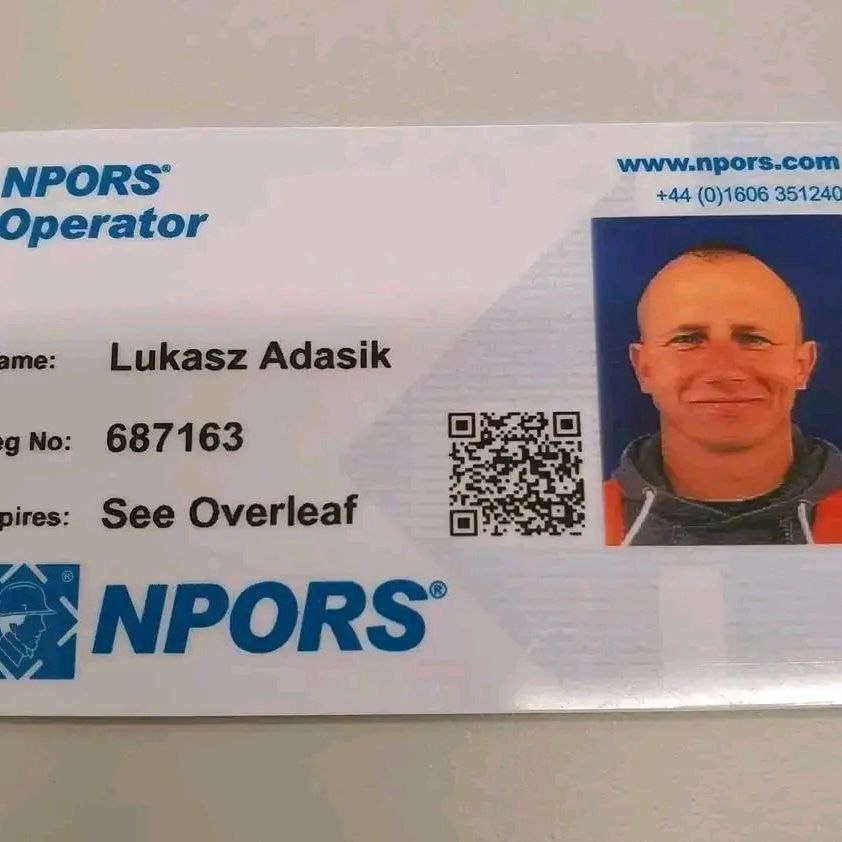
Once all requirements are successfully met, the candidate is issued an NPORS Operator Card. This card acts as official proof of competence and is accepted on many UK construction sites, often alongside or as an alternative to other certification schemes such as CPCS.
Overall, NPORS card requirements ensure that plant operators are properly trained, safety-conscious, and fully qualified to perform their roles in compliance with industry standards.